 Budowle.pl


Kowloon Walled City in Hong Kong - a city within a city, a settlement of darkness
Kowloon Walled City (city) is located in Hong Kong (China).
Where is Kowloon Walled City?
Address of Kowloon Walled City is Hong Kong, China
show on map
When did construction finish on Kowloon Walled City?
The construction date of Kowloon Walled City is 1847 - as Chinese fortress built by Qing dynasty; residential expansion since 1940s.

Facts, information and history of Kowloon Walled City
Imagine a place where, on just 2.56 hectares, over 50,000 people lived—a population density of 1.9 million residents per square kilometer, 70 times greater than Manhattan. Where the sun never reached the lower floors, and the temperature difference between the lowest and highest apartment could reach 15 degrees Celsius. This isn't a scene from a science fiction movie—it was the reality of the Kowloon Walled City, the most extraordinary settlement in human history.
The Kowloon Walled City in Hong Kong, often referred to as a "city within a city" or "city of darkness", is a fascinating chapter in the history of urban planning and sociology. It was a place that for years eluded control by both British and Chinese authorities, becoming an enclave with a unique history. The turbulent past of this place—from a fort warning against pirates to an illegal settlement—makes it one of the most intriguing locations in urban history.
History of the Kowloon Walled City
The roots of the Kowloon Walled City date back to 1847, when the Qing dynasty built a strong Chinese fortress measuring 213 by 120 meters, surrounded by massive walls 4–5 meters thick at the base. The original fortification was surrounded by a 3-meter-deep moat and had walls up to 6 meters high above ground level. The Kowloon fortress played a key strategic role—it controlled marine traffic in the bay and protected the region from pirates and foreign influence.
Everything changed dramatically in 1898 when Britain leased the New Territories from China for 99 years. However, the lease agreement included a key clause—the Kowloon Walled City was to remain under Chinese jurisdiction. This legal ambiguity became a source of problems for decades to come.
After World War II and the Chinese Civil War, thousands of refugees poured into Hong Kong seeking safe shelter. The Kowloon Walled City, as a legal no-man’s land, became a natural settlement area for those with nowhere else to go.
Beginnings and Development of the Settlement
The history of the Kowloon Walled City in Hong Kong dates back to when the area served as a fort. The fort's history begins in the 15th century. It was intended to defend against pirates and was a crucial element in China’s defense system. In 1898, when Britain leased new territories from China, including parts of Hong Kong, Kowloon remained under Chinese jurisdiction, though the British did not intend to leave it that way.
The lease terms between Britain and China left the fort in Chinese hands, which became the seed of future problems and the uniqueness of the Kowloon Walled City. The original fort was built on a slope and occupied an area of about 2.6 hectares, measuring roughly 210 by 120 meters.
The transformation of Kowloon from a fortress into a residential estate was a gradual and organic process. In the 1940s, early residents occupied military buildings and began modifying them. The lack of official building permits meant that anyone could construct structures at will. Construction accelerated significantly in the 1950s and 1960s, as more and more refugees from mainland China sought shelter in Hong Kong.
The 1970s and 1980s marked the peak development of the complex. Buildings reached 10–14 floors, with some even going up to 16–17 stories. In an area just 220 by 110 meters, around 300 buildings were crammed together in an irregular yet compact mass. Residents connected structures with bridges, walkways, and tunnels, creating a complex communication network.
Population Density and Daily Life
The Kowloon Walled City gained notoriety as a place of extreme population density. In a relatively small area of one square kilometer, about 50,000 people lived, making it one of the most densely populated places on Earth. The settlement expanded chaotically, with buildings rising up to about 14 stories, creating a labyrinth of corridors and passages.
At its peak in the 1980s, the population density was an absolute global record—1.9 million residents per square kilometer! Apartments were microscopic—the average living space was just 5–10 square meters per family. Families of 3–4 had to live in a space the size of an average bathroom.
Access to sunlight was limited, and residents lived in dirty and cramped conditions. Daily life was challenging, but the community managed to create its own informal social structures, ensuring access to water and electricity. The sun reached only the upper floors—residents of the lower levels lived in permanent twilight. Ground-level streets were as narrow as corridors, often only 1–2 meters wide.
Transport within the complex relied entirely on foot. No vehicles could enter the inner labyrinth. All goods—from food to construction materials—had to be carried up stairs. Trade and services flourished in every corner. Shops, restaurants, workshops, and small factories operated on the ground floors.
A Refuge for Criminals – How Kowloon Became the City of Darkness
After World War II, the Kowloon Walled City became a haven for criminals due to the lack of law enforcement by both British and Chinese authorities. This absence of control fostered crime. Criminals could find refuge there. Illegal immigrants began to arrive, worsening already difficult living conditions.
The reputation of Kowloon Walled City as a "city of darkness" was well-earned. The lack of police control and its legal vacuum attracted all sorts of borderline or outright illegal activities. Triads—Hong Kong’s criminal organizations—quickly saw the potential of the area. Illegal activities thrived in the complex for decades. Underground casinos, brothels, drug factories, and stolen goods warehouses found shelter there.
The city became infamous as a place of gambling, drugs, and prostitution. Despite its dark side, Kowloon also offered refuge for those who had no other place to live. The term "city of darkness" referred not only to the lack of sunlight on the lower levels, but also to the metaphorical darkness of lawlessness.
Paradoxically, however, the Triads also maintained a certain level of social order. They acted as unofficial law enforcement, resolving disputes between residents and providing a semblance of safety. Most residents were ordinary people trying to survive under difficult conditions.
Legal and Illegal Aspects of Life in the Settlement
Life in the Kowloon Walled City balanced on the edge of legality and illegality. Alongside criminal enterprises, there were also legal medical practices, small factories, and shops. Residents tried to live normal lives despite pervasive crime and the lack of regulation.
The legal status of the Kowloon Walled City was complex and contradictory. Officially, the area belonged to China, but practically it was on territory administered by Britain. Hong Kong police entered the complex only during major operations and usually with Chinese officials in tow.
Illegal food factories produced about 40% of all fish balls sold in Hong Kong. These popular snacks were made in tiny kitchens without any certification or sanitary inspection. Illegal medical practice thrived in the complex. Dentists and doctors without licenses offered services at much lower prices, and many had actual medical training.
A quasi-self-government system developed naturally. Elderly residents and local leaders resolved disputes, organized community initiatives, and represented the community’s interests to the outside world.
In 1984, Hong Kong authorities announced plans to demolish the Kowloon Walled City. Ultimately, in 1993, the city was demolished, and in its place arose the Kowloon Walled City Park, commemorating the history of this extraordinary place.
Architecture and Structure of the Kowloon Walled City
The architecture of the Kowloon Walled City was a true phenomenon—a unique blend of chaos and functionality. The lack of central planning led to a structure that looked like a concrete jungle, yet somehow worked. The total area of the complex was exactly 26,000 square meters (2.6 hectares).
Building materials were diverse—from reinforced concrete and red brick to wood and sheet metal. Residents used whatever was available and affordable. Public space on the ground level practically didn’t exist. Narrow alleys 1–3 meters wide served as main communication arteries.
Buildings and Urban Layout
The architecture of the Kowloon Walled City in Hong Kong was unusual and chaotic, reflecting its unregulated nature. Buildings grew without planning, often without architects or engineers. Due to the extreme population density, structures were built on top of each other, forming a dense network of corridors and pathways.
The urban layout was entirely chaotic but had its own internal logic. Buildings grew organically, adapting to existing structures and available space. There were no streets in the traditional sense—only narrow passages between buildings. Older buildings from the 1950s and 60s were usually shorter and sturdier. Newer constructions from the 70s and 80s were taller and slimmer, using every available square meter.
In an area measuring just 220 by 110 meters, approximately 200 individual towers were crammed together, averaging 14 stories in height. Many buildings reached up to 14 floors, and the narrow alleys on the ground rarely saw daylight. The Kowloon Walled City was a place where every square meter was valuable, which dictated how buildings were constructed and expanded.
The numbering system for buildings was complicated and only understandable to the residents. Addresses often sounded like: "the third building past the noodle shop, fifth floor, second door on the left." Rooftops became true social centers—home to restaurants, children’s playgrounds, gardens, and meeting places.
Structural System – Bridges, Passages, Ventilation
The structural system of the Kowloon Walled City in Hong Kong was improvised, with buildings connected by bridges and passages. Due to population density and lack of spatial planning, ventilation was poor. Many areas lacked access to natural sunlight.
The structural system was a true miracle of vernacular engineering. Without formal load-bearing calculations or technical supervision, residents built a structure that endured decades of intense use. Foundations were varied and often improvised. Some buildings were supported by remnants of the original 19th-century fortress walls.
Bridges and passages between buildings were masterpieces of practical engineering. Residents built them from available materials—steel beams, wooden planks, pipes, and whatever was on hand. Most bridges lasted for years without major failure, despite lacking formal structural calculations.
Main infrastructure problems:
- no planned sewage system—residents organized water access themselves,
- unregulated electrical installations—posing constant fire hazards,
- poor ventilation—many rooms lacked natural light,
- tight corridors—some passages were just a meter wide,
- no elevators—residents had to climb up to 14 floors on foot.
The ventilation system was one of the greatest technical challenges. In the lower parts of the complex, air barely circulated. Temperatures varied significantly throughout the complex. Lower levels were cool and damp, middle areas hot and stuffy, while upper floors had access to fresh air.
Residents organized water and electricity access themselves, creating informal networks. Fires were a frequent danger due to crowding and unregulated electrical wiring. Despite these challenges, the estate functioned as a self-sufficient whole. The electrical systems resembled a technological jungle. Wires hung haphazardly from ceilings, often connected dangerously.
Purpose and Demolition of the Kowloon Walled City
The decision to eliminate the Kowloon Walled City developed over years. British and Chinese authorities long considered the complex a problem, but the lack of clear jurisdiction made decisive action difficult. Negotiations over the territory’s future became serious in the mid-1980s. The demographic reasons were clear—population density had become unsustainable. Safety concerns also played a role. The complex was hard to control for the security services of either state.
Demolition Decision – Causes and Consequences
The decision to demolish the Kowloon Walled City in Hong Kong was made in 1984, and the project began in 1993. The main reason was that the area had become synonymous with crime and anarchy. The lack of government control fostered illegal activities.
The official demolition decision was made on January 14, 1987, after years of complex negotiations between Britain and China. Both sides agreed that the complex had become an intolerable problem. Immediate causes included catastrophic sanitation, fire risks, and the inability to provide basic public services.
Another argument was the disastrous state of infrastructure. Buildings had grown without planning, posing fire and sanitary hazards. Demolishing the settlement allowed the area to be cleaned up and transformed into Kowloon Walled City Park, commemorating Kowloon’s history.
Evacuation and demolition process:
- 1984–1987 – negotiations between British and Chinese authorities,
- 1987–1992 – gradual evacuation of residents (about 33,000 people),
- 1993–1994 – physical demolition of all structures,
- 1995 – opening of Kowloon Walled City Park.
The eviction process began in 1991 and lasted two years. Each family received compensation and the right to live in new public housing. The total compensation paid was approximately HK$350 million—a huge sum at the time.
The demolition officially began on March 23, 1993. It was a technically complex operation—the structure had to be dismantled safely after half a century of chaotic growth. All work was completed in April 1994, after 13 months of intensive labor.
Legacy of Kowloon City in Modern Hong Kong
The legacy of Kowloon City in modern Hong Kong lives on in the memory of its residents and in the Kowloon Walled City Park. The park was built on the site of the former settlement. Its architecture references the structure once found in the Walled City, serving as a memorial to this extraordinary enclave.
Kowloon Walled City Park officially opened on December 22, 1995 at the site of the former housing complex. The park’s design follows the style of traditional Chinese garden architecture, creating a peaceful oasis in the center of a densely built city. Archaeological remains of the original 19th-century fortress were partially preserved. Visitors can view sections of the original walls, the moat, and the foundations of former structures.
Although the Kowloon Walled City no longer physically exists, its history and legends live on in the consciousness of Hong Kong residents, reminding them of the area’s unique past. Today, Kowloon Walled City has also become an inspiration for films, video games, and cyberpunk literature.
Kai Tak Airport and Its Impact on the Region’s Development
Kai Tak Airport, located near the Kowloon Walled City in Hong Kong, had a significant impact on the development of the region. The airport’s proximity limited the height of buildings in the Kowloon Walled City to around 14 stories due to aviation safety regulations. The noise generated by the airport made life difficult for residents, with airplanes flying literally above the rooftops.
Located just a few kilometers from the complex, the airport was one of the most dangerous in the world due to the dense urban development in the area. Planes flying in for landing passed extremely low over the complex—sometimes just tens of meters above the tallest buildings.
The noise from airplanes was a major problem for residents. Every few minutes, huge aircraft roared overhead, causing buildings to vibrate and disrupting daily life. Residents of upper floors could practically touch passing planes. The development of aviation and increasing air traffic made the situation ever more dangerous.
At the same time, the airport’s presence contributed to the region’s economic growth by generating jobs and attracting tourists. After the airport was relocated to a new site in 1998, the areas around Kowloon gained value, and the Kowloon Walled City could finally be demolished and turned into a park. Plans to build a new airport at Chek Lap Kok were partly motivated by the problems associated with Kai Tak and the surrounding development.
Curiosities and Unknown Facts About the City of Darkness
The Kowloon Walled City in Hong Kong, also known as the "City of Darkness", held many curiosities and little-known facts:
Records in Population Density
It is estimated that the population density in the Kowloon Walled City was among the highest in the world. About 50,000 people were crammed into one square kilometer, reaching an unimaginable density of 1.9 million people per square kilometer at its peak.
The densest neighborhood in human history—at its peak, there were an average of 1.9 people per square meter. That means if you laid on the floor with your arms spread, you’d occupy the space of nearly two residents! This density was 70 times greater than that of Manhattan.
A Self-Sufficient Community
The Kowloon Walled City was a self-sufficient community, where legal and illegal medical clinics, schools, textile factories, restaurants, and small shops operated side by side. Buildings grew without planning or control, and in many places, residents had no access to sunlight for entire days.
A self-run postal system operated in the complex without official services. Hong Kong postal workers did not enter the labyrinth, so residents organized their own mail delivery. Some became specialists in this service, knowing every corner of the complex and navigating it faster than regular streets.
Fish ball factories hidden in apartments produced around 40% of all fish balls sold in Hong Kong. These popular snacks were made by entire families working 12–14 hours a day in tiny kitchens. Quality varied, but prices were unbeatable.
Architectural Oddities
- The only open space—a small courtyard in the center of the settlement, which was also covered with low-rise buildings.
- Communication systems—residents moved mainly across rooftops and through internal corridors.
- Workshops and factories—entire businesses operated in spaces the size of typical apartments.
- Dental clinics—paradoxically, many illegal but efficient dental offices operated there.
Children grew up on the rooftops—the upper floors were the only areas where they could play freely. At 50 meters above the ground, people built soccer fields, playgrounds, and gardens. Children weren’t afraid of heights—they had been accustomed to it since their first steps.
Illegal dentists earned reputations comparable to licensed professionals. Many were trained doctors from mainland China who couldn’t obtain licenses in Hong Kong. Prices were far lower, and wait times much shorter.
Microclimates varied drastically within different parts of the complex. The lower levels were damp and cool like caves, the middle zones were stuffy like saunas, and the upper floors had access to fresh air. The temperature difference could reach 15 degrees Celsius between the lowest and highest levels! This unique variety of climatic conditions meant that the Kowloon Walled City functioned almost like a vertical city with its own weather zones.
Legacy in Popular Culture
The cultural impact of the former complex is enormous. The Kowloon Walled City has become a pop culture icon, inspiring cyberpunk films, video games, comics, and science fiction literature. "Ghost in the Shell", "Blade Runner 2049", and hundreds of other productions draw on the aesthetic of this place. Architects and urban planners around the world study Kowloon as an example of extreme residential density and spontaneous urbanization.
The legacy of the Kowloon Walled City is omnipresent in pop culture, particularly within the cyberpunk genre. The aesthetics of dark, densely built spaces have influenced:
- films: "Ghost in the Shell", "Blade Runner", "Batman Begins", "The Raid 2",
- games: "Shenmue II", "Call of Duty: Black Ops", "Sleeping Dogs", "Stray",
- comics and anime: "Akira", "Battle Angel Alita", "Gunnm".
Architects and urbanists analyze the structure of the Kowloon Walled City as an example of "wild urbanism", and even as a prototype of so-called "vertical slums"—the slums of the future built skyward.
Kowloon Walled City – Myth, Warning, Inspiration
Although it no longer exists physically, the Kowloon Walled City remains one of the most fascinating examples of grassroots urbanization in the world. For some, it’s a terrifying vision of an urban hell; for others—a symbol of human resourcefulness and independence. An urban nightmare, but also a sociological experiment.
The city showed what happens when there is no central oversight and space becomes a scarce commodity. It was a warning for planners, architects, and policymakers—but also an inspiration for creators and researchers.
The Kowloon Walled City is an example of extreme urbanization that still fascinates, frightens, and inspires. For some, it’s a symbol of civilization's collapse. For others—proof that communities can self-organize even under the harshest conditions.
The city of darkness became a beacon for the future—a warning against urban chaos, but also a tribute to human perseverance.
"This was a city that planned itself - a place where the government gave up control and the people took the initiative." - Frank Dikötter, historian and professor at the University of Hong Kong
How tall is Kowloon Walled City?
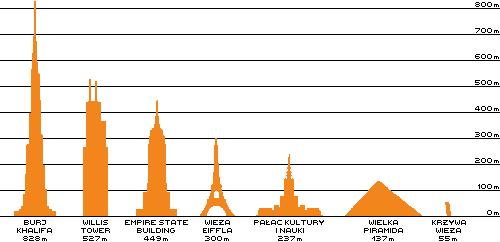
Height of Kowloon Walled City is 40-45 meters - an average of 12-14 floors

Construction/building type
Building Kowloon Walled City is of type City
Other dimensions, parameters and frequently asked questions

What is the area of Kowloon Walled City?
Kowloon Walled City covers an area of Approximately 2.6 hectares (26,000 m² to be exact)
What is the capacity of Kowloon Walled City?
Kowloon Walled City has a capacity of Estimated at more than 1 million m³ - taking into account compact development and heights of up to 17 stories
What material is the building made of?
Kowloon Walled City is made of the following materials: Reinforced concrete, red brick, wood, sheet metal - improvised, often secondary materials
Questions and answers
Can you visit the Kowloon Walled City today?
No, the original complex was demolished between 1993 and 1994. In its place is the Kowloon Walled City Park, which is open to visitors and features educational paths and remnants of the fortress walls.
Did anyone live there legally?
Most residents did not have official documents or permits, but many lived there with their families for decades. Some businesses—such as shops or clinics—operated openly, though without licenses.
Was the Kowloon Walled City really dangerous?
Yes and no. In the 1950s–70s, strong criminal groups operated there, but later the settlement became more orderly. Despite the harsh conditions, many residents recall life there as safe—more like a small, close-knit community.
Were there schools and medical facilities?
Yes—there were informal schools run by religious organizations, as well as numerous (often illegal) dental and medical clinics.
How many families lived in the Kowloon Walled City?
It is estimated that at its peak, the settlement housed around 33,000–50,000 people in over 200 buildings, forming a dense, vertical structure.
Why did the Kowloon Walled City survive so long without government intervention?
This was due to the settlement’s unclear legal status—formally it belonged to China, but it was located in territory controlled by Britain. For decades, neither side wanted to take responsibility for the area.
Were there elevators or any form of internal transport?
No—all movement was on foot. There were no elevators, and residents had to climb up to 14–17 floors by stairs. Goods (e.g., food, construction materials) were transported manually.
Are any original parts of the complex still preserved?
Yes—you can still see remnants of the walls, the South Gate, foundation fragments, and fortification elements in Kowloon Walled City Park, serving as reminders of the site's history.




Location on map / How to get there
Find accommodation nearby
Weather nearby

Rent a car nearby
Author

Author: Redakcja Budowle.pl
Pasjonat architektury, właściciel portalu Budowle.pl
Date added: 20/07/2025 Last updated: 20/07/2025 Number of views : 4981


Comments to Kowloon Walled City (0)
Be the first to add a review!
No comments